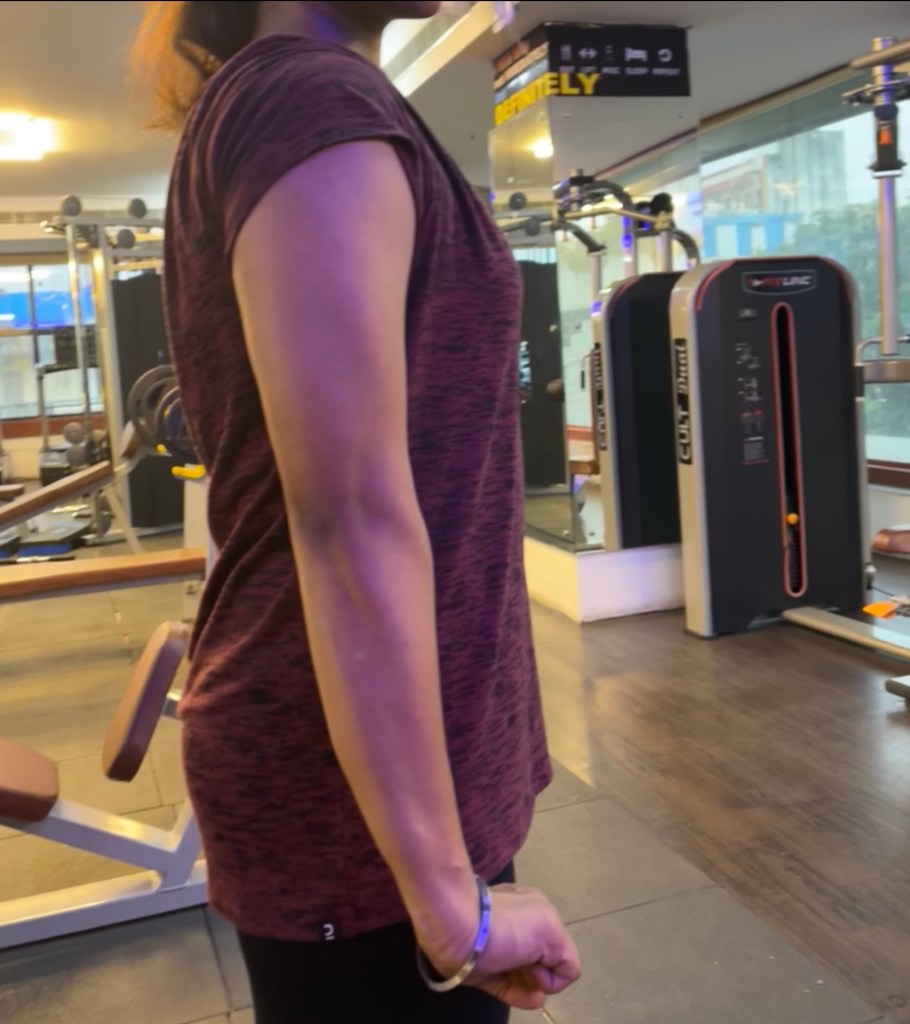
(Just me flexing my triceps 😉 )
What is Strength Training?
Strength training is often referred to as resistance training or weight training. It essentially includes physical exercise designed to increase the strength and endurance of your muscles by targeting a specific muscle or group of muscles against external forces.
Strength training can be considered as an activity or set of workouts that help different muscles in your body get stronger. When someone has strong muscles, they have more stamina and strength for everyday activities. If the muscles are strong, their physique will heal quickly from injuries and burn caloriesmore effectively.
The most important thing to understand is that strengthening training isn’t solely about bodybuilders who lift weight in the gym. Training your body is beneficial for individuals of all fitness levels and ages in various ways. It can be great for weight loss, preventing muscle mass loss due to aging, and aid patients who suffer from chronic health issues like arthritis, obesity, or heart conditions.
5 Different Forms Of Strength Training
The fundamental principle behind strength training is to use resistance and weights through a series of repeated exercises. These exercises then change the strength, endurance, and size of your muscles or a specific group of muscles. Although, depending on the weights or resistance that you are using, there are various types of strength training out there.
The five different forms of strength training include:
Resistance Band Training
Resistance bands or resistance tubing can also be used for strength training. Since resistance bands are flexible, exercising with them requires a force that helps you train your muscles. This lets you attain impressive results via the extension and contraction of muscles. You can even use multiple resistance bands at once to change the resistance or the force required to make your strength training even more intense.
Bodyweight Training
Simple bodyweight training exercises are an excellent option for strength, flexibility, and overall health gains. They are easy to do anywhere and cost nothing since you don’t need any fitness equipment for the same. And since there are all kinds of bodyweight training exercises like squats, push-ups, planks, lunges, pull-ups, crunches, and many more, bodyweight training is perfect for all fitness levels.
Cable Machine Training
Cable machines use weight stacks connected to pulleys or cams by cables. They only move in one direction. Cable machines are great for anyone new to strength training. This training isolates one muscle at a time and provides controlled motion. And depending on the weight, it can also be used for intense workouts.
Free Weight Training
In free weight training, weights don’t need to be attached to a machine. This can include using dumbbells or barbells depending on the exercise. Start small with some dumbbells if you prefer to train at home. And if you are experienced, you can use heavier dumbbells and barbells with weights at the gym. Free weight training allows you to add or remove weights as per your expertise and the exercise. However, make sure that your form is correct else you may face injuries while using heavy weights.
Weight Machine Training
Other than cable machine training, you can even find weight machines in many gyms. While they might not allow natural and free movement like free weights, weight machine training helps you safely maintain the correct form. However, Weight machines are generally more expensive, regardless of whether you purchase one for home use or pay for a gym membership.
6 Wonderful Benefits of Strength Training Exercises
Irrespective of the type of strength training you are going for, it is going to offer various benefits. And down below, you can find some of the best benefits of strength training exercises:
Better Cardiovascular Health
Visceral fat is a type of fat that gets deposited around your abdominal organs like the liver and the intestines. And a higher quantity of this fat can increase the risk of cardiovascular diseases. This is where strength training comes into play since it can help you lose visceral fat. More importantly, since strength training also increases your blood oxygen flow and lowers your blood pressure, it can help in improving your heart health as well.
Reduce Body Fat
The size of your muscles determines your basal metabolic rate or BMR. As you build lean muscle mass, your metabolic rate increases which essentially means that you will burn more calories. Not only that but strength training will increase your TDEE over time. And all of these changes will help you lose fat from all over your body since your calorie consumption will change.
Improved Quality of Life
Strength training can enhance your overall health and help you carry out everyday tasks easily. It can also prevent injuries in your body joints as you grow muscle mass. The development of muscles can also lead to better body balance and mobility. And this will allow you to stay active and fit even as you age.
Develop Muscles
Other than losing weight, you would also want to increase your muscle mass to get a muscular body if you want the body of your dreams. Apart from having a great-looking body, strength training will also help you prevent muscle loss from your body in the later stages of your life. In people over 30 years of age, this can prevent joint aches and muscle loss since your body’s muscle mass naturally declines with age.
Chronic Disease Prevention
There are various chronic diseases that can be caused due to an unhealthy lifestyle. Some of these chronic diseases include fatty liver, diabetes, heart conditions, arthritis, and much more. And if you are physically active with activities like strength training, it can definitely help in preventing such issues.
6 Strength Training Exercises for Beginners
In case you are also interested in strength training, then you can check out these 6 strength training exercises for beginners. These exercises are great for those who are just beginning because they will help in learning basic exercises forms while building muscle mass:
- Squat: Squat is a great compound exercise that not only trains your legs but also targets your back and abdominal muscles.
- Plank: While you may have to go for plank on palms as a beginner, the plank is great for targeting your core muscles along with legs, arms, and shoulder muscles.
- Jumping Jacks: Jumping jacks can be a great option for HIIT workouts since you can train your whole body at once. It primarily works your leg and shoulder muscles while keeping your lungs and heart active.
- Glute Bridge: Glute bridges focus on one of the most powerful muscles in the lower part of the body, the glutes. They also help build the strength of your legs and stabilize your core.
- Push Up: A push-up is a press exercise that targets various muscles in your upper body, including your shoulders, chest, triceps, and more. And as per your variation, it can even be ideal for beginners.
- Lunges: Lunges can be another great way to train your leg muscles along with lower back muscles. It can even have variations like static lunges, walking lunges, and reverse lunges.
Precautions for Strength Training
Before you start with the above or any other strength training exercise, you should keep some precautions in mind including the following:
- Make sure to warm up before and cool down after your workouts for 5-10 minutes. Running or brisk walking can be a great warm-up for beginners and stretching is ideal for post-workout cool-downs.
- Training major muscle groups one by one 3 to 5 times per week is ideal for beginners.
- Maintaining proper form while exercising is vital for preventing any injuries and maximizing muscle gain.
- As you work out regularly, your muscles will break down. Your body can take 48-72 hours for a certain muscle group to fully recover. So make sure to take a break from training a given muscle group until it fully recovers.
Conclusion
Strength training can provide various health benefits including a lower risk of diabetes and heart disease, making your bones stronger, improving mood and mental health and boosting self-esteem. And strength training is much more than just lifting weights at the gym. You can even go for highly effective workouts at your home with your body weight, resistance bands, free weights, and much more.
With the basics of strength training explained above, you can slowly train your body and improve your lifestyle with time. As your muscle mass grows with time, you will be able to lift much heavier weights with ease. Whether you’re a beginner or an expert, the benefits of strength training are beneficial for everyone.
 PROTONE by KJ